Dreame C1 Station S Kit
Top-ranked for equipment.
Read the review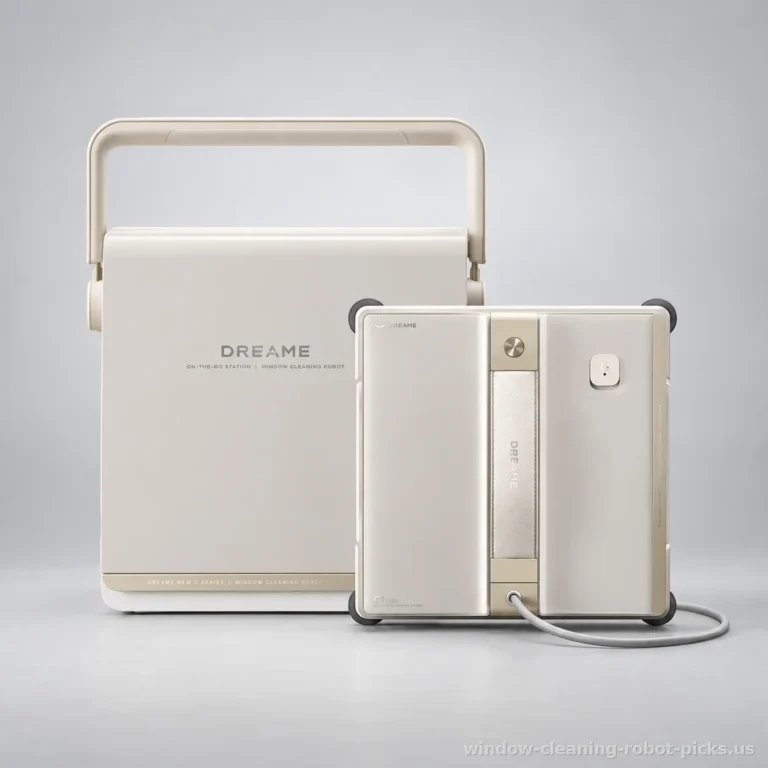 Our rankingsThe best window-cleaning robots27 window-cleaning robots
By power supply during cleaning
By manufacturer's intended use
By indoor / outdoor cleaning
By compatible surfaces
Features and options
Our guides to choosing
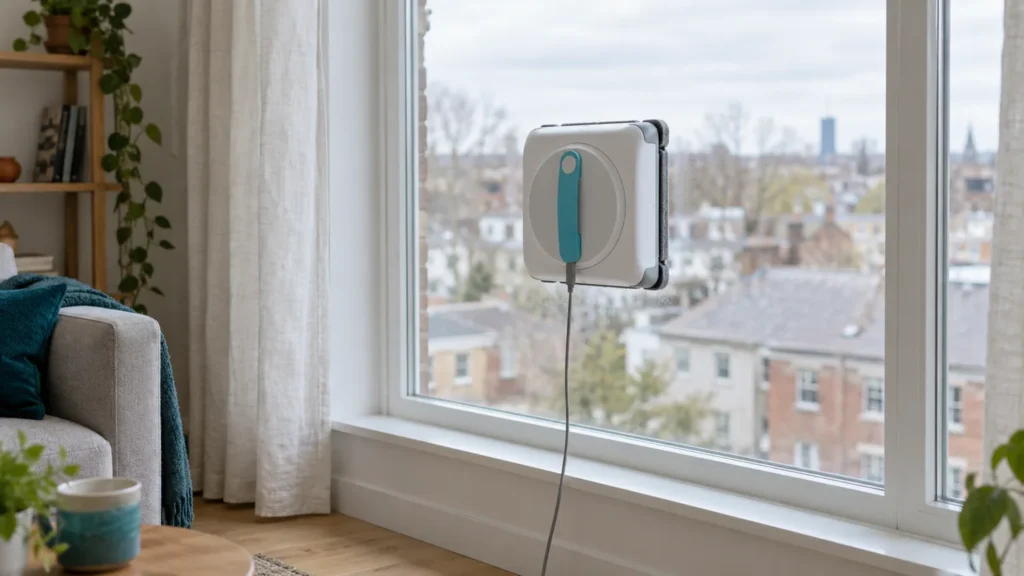
Holding power or a lightweight device, you often need to strike a balance between the 2 when choosing a home window-cleaning robot suited to your windows. Our buying guide explains the criteria to consider below.
Prices collected from retailers are for guidance only: they may have changed since, the current price is the one shown by the retailer. No price is shown for models sold only on Amazon. Amounts converted from reference prices in euros using a dated exchange rate.
Top-ranked for equipment.
Read the review
Key strength: suction pressure, rated 9.3/10.
Read the review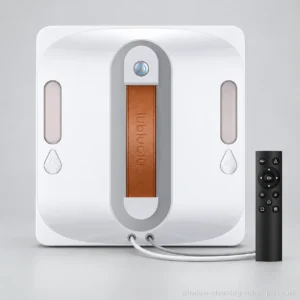
Top-ranked for water tank capacity.
Read the review| Rankings | Rating | Price | Suction pressure | Electrical power | Water tank capacity | Battery-powered cleaning runtime | Backup battery holding time | Robot height | Robot weight | Noise level | Operating radius |
|---|---|---|---|---|---|---|---|---|---|---|---|
| 1. Dreame C1 Station S Kit | 9.3/10 | $424 | 8000 Pa | n/a | 80 ml | 60 min | n/a | n/a | n/a | 63 dB | n/a |
| 2. Ecovacs WINBOT W2S OMNI | 9.1/10 | $485 | 8000 Pa | n/a | 80 ml | n/a | n/a | n/a | 1.95 kg | n/a | n/a |
| 3. Lubluelu CHYW201 | 9/10 | n/a | 6500 Pa | n/a | 160 ml | n/a | 30 min | n/a | n/a | n/a | n/a |
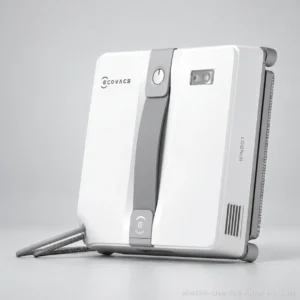
| 4. Ecovacs WINBOT MINI | 8.7/10 | $183 | 7500 Pa | 90 W | 60 ml | n/a | 30 min | 5.5 cm | n/a | 63 dB | n/a |
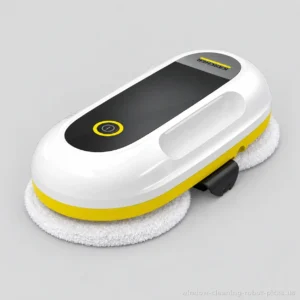
| 5. Kärcher RCW 2 | 8.3/10 | $189 | 3300 Pa | n/a | 70 ml | n/a | n/a | 7.1 cm | 1.1 kg | 62 dB | n/a |
Rankings are based on our review ratings, calculated by comparing manufacturer specifications across the full catalogue.Our methodology.
Cleaning high windows or a large picture window remains a risky, time-consuming chore. A window cleaning robot takes over on hard-to-reach surfaces, with no ladder or stepladder needed, and methodically covers the entire surface while you get on with other things.
Upper-floor windows, conservatory glazing and large office windows all present the same challenge: reaching them safely for manual cleaning. The robot attaches directly to the glass using electric suction or magnetic attachment, and moves up and down the full height on its own. This is particularly useful with a window cleaning robot for exterior windows, where climbing poses a real danger.
Manual cleaning means preparing equipment, rinsing the squeegee regularly and going back over streaks left on the glass. The robot follows an automatic route and goes over previously cleaned areas with its microfibre pads, reducing streaks and repeated passes. The time savings are most noticeable on large glass surfaces, less so on a single small window, where manual cleaning is often still quicker.
This type of device is primarily aimed at households with large glass surfaces: sliding glass doors, conservatories and skylights. It also appeals to businesses (shops and offices with display windows) that need to maintain large glass façades regularly, as well as people with reduced mobility or anyone who simply cannot climb safely. By contrast, in a flat with 2 or 3 standard windows, the benefits over conventional manual cleaning are more limited.
A window cleaning robot cannot fully replace manual cleaning: angles, edges and corners often remain its weak points, as do heavily soiled windows that need pretreatment. Choosing between a mains-powered window cleaning robot and a battery-powered model also affects runtime and freedom of movement. Finally, maintenance (cleaning the tank and replacing the microfibre pads) needs to be planned for to maintain consistent performance over time.
Market positioning varies widely depending on the attachment technology, runtime and included accessories: entry-level models cover the essentials for occasional use, while high-end models are aimed more at frequent use on large surfaces. The selection below details the models that stand out against these criteria, helping you identify the one that best suits your glazing setup.
This choice determines everything else. A robot with electric suction creates constant negative pressure between the glass and the device: it works on single glazing as well as thick glass, even without access to the other side, making it suitable for exterior windows that are hard to reach. A robot with magnetic attachment uses 2 modules that clamp together on opposite sides of the pane: it requires access to both sides, all 2 of them, but is quieter and lighter to handle.
The deciding factor is safety in the event of a failure. With electric suction, a power cut causes the negative pressure to drop: only a model with a backup battery will maintain its grip long enough for you to retrieve the device. With a magnetic system, the attraction is physical and requires no power supply, reducing the risk of a fall even during a power cut.
Before checking the specifications, measure your windows. Window-cleaning robots are not universally compatible: suitability depends on glass thickness and the presence of seals, glazing bars or a protruding frame. With single glazing, most suction models work without any special adjustment. With double glazing, the thickness and composition of the glass can reduce suction effectiveness: some manufacturers specify a maximum thickness, which you should always check before buying.
Decorative glazing bars, intermediate uprights and edges within a few centimetres of the frame remain weak points for almost all robots, including models designed for exterior windows. The robot moves to the detected edge, then changes direction, consistently leaving an uncleaned strip to tackle by hand.
There are 2 types of power supply. A mains-powered window-cleaning robot stays plugged in through a cable: runtime is no longer an issue, but cable length limits freedom of movement across a large window. By contrast, a robot powered by a battery station with a cable carries its own power supply and offers greater flexibility, but its runtime needs monitoring on large glass surfaces such as conservatories or sliding windows.
For a standard household window, the stated runtime is generally enough for a full cleaning cycle. For a glass façade or several windows in succession, it is better to choose a mains-powered model or plan to recharge between sessions.
These are the 2 components that prevent accidents, rather than mere marketing extras. The safety strap attaches to an external anchor point and physically secures the device if it loses its grip, whatever the cause. It is particularly recommended for upper-floor windows, exterior glass or when the robot operates without direct supervision.
The backup battery only takes over during a power outage on a model with electric suction: it maintains suction long enough to retrieve the device and does not replace the strap. The 2 safety features complement each other and are not mutually exclusive.
A physical remote control is sufficient for occasional use and remains easier to get to grips with. A mobile app offers greater convenience: cleaning path selection, scheduling and end-of-cycle notifications. The noise level also deserves attention, especially for regular daytime use in an occupied home: feedback consistently points to greater disturbance from models with powerful suction, which makes sense given that maintaining suction puts greater demands on the motor.
Entry-level options generally include mains-powered magnetic robots with a basic remote control: sufficient for single glazing without glazing bars. Mid-range models introduce an onboard battery and a dedicated app. High-end models bring together electric suction compatible with thick double glazing, an integrated backup battery and a strap supplied as standard.
The choice depends above all on safety and compatibility, rather than advertised power. An electric suction cup accommodates more configurations but requires a backup battery and ideally a strap. A magnetic attachment system makes operation simpler on suitable glazing, provided you can access the 2 sides. Measuring your windows accurately before buying remains the best way to avoid disappointment.
No, not always. Compatibility depends on the thickness of the glass, the presence of seals or glazing bars, and whether the glazing is single or double. An electric suction model needs a smooth, continuous surface, while a magnetic model requires double glazing thin enough for the 2 parts to hold each other in place. A window-cleaning robot used on exterior windows also needs a stronger grip to withstand the wind.
On an electric suction robot, a power cut can cause a loss of the suction holding the device against the glass. This is why a backup battery and a safety tether are essential: the battery maintains the vacuum for a few minutes, giving you time to retrieve the device using the tether. Models without these 2 safeguards risk falling, especially at height or on a large window.
For routine cleaning, damp microfibre pads are usually enough to pick up dust and light marks. On heavily soiled glass, however, a suitable glass cleaner improves the result, provided you avoid harsh products that damage the robot's pads or seals. It is best to follow the manufacturer's recommendations rather than improvise a homemade mixture.
Yes, staying nearby is recommended, especially during the first few uses. This lets you monitor its path, intervene if the device approaches a frame or an obstacle, and, above all, be ready to use the safety tether in the event of a power cut or malfunction. This is not a device you can set up and forget about completely.
Cleaning time varies with the size of the window and how dirty it is, ranging from a few minutes for a standard window to a little longer for a large window. Very dirty glass or an angular surface can extend the cycle, as the robot sometimes goes over the same areas again to achieve an even finish.
Rinse the pads after each use and leave them to air-dry. Most are machine-washable at a low temperature, without fabric softener, which reduces their absorbency. Replace them as soon as they start to fray or lose their ability to pick up dust, and regularly check the condition of the water tank or water system, depending on the model.
Not completely. The robot's shape and size almost always leave a strip near the edges, corners and glazing bars that the device cannot reach. These areas therefore still need a quick manual wipe for a completely even finish, whichever window-cleaning robot you use.
Electric suction is suitable for most smooth, single-glazed panes without seals or glazing bars, but relies on continuous suction to stay in place. Magnets only work on double glazing of a compatible thickness, with a component on each side of the glass: they will not detach during a power cut, but cannot be used on single glazing.