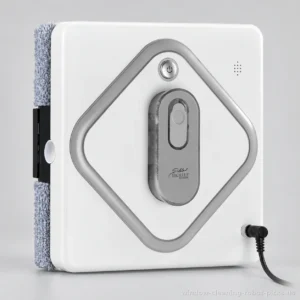
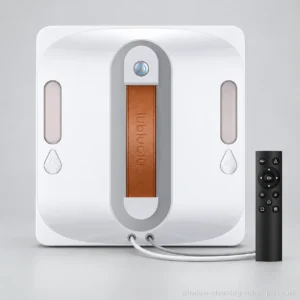
Lubluelu CHYW201
Top-ranked for water tank capacity.
Read the review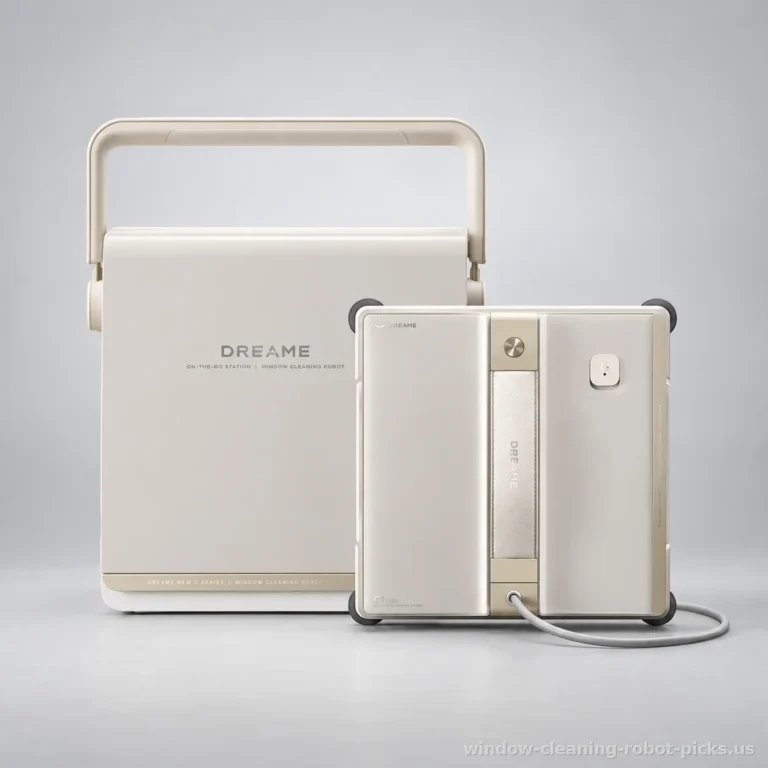 Our rankingsThe best window-cleaning robots27 window-cleaning robots
By power supply during cleaning
By manufacturer's intended use
By indoor / outdoor cleaning
By compatible surfaces
Features and options
Our guides to choosing
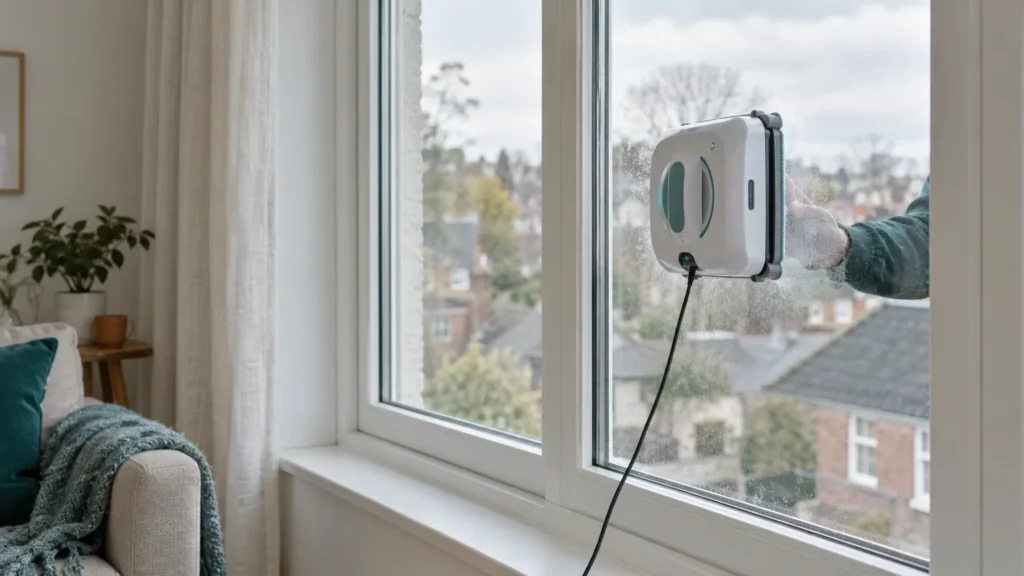
To choose your window cleaning robot for exterior windows, explore our selection of models, narrow your choices using the filters and consult the buying guide based on your glazing and access conditions.
Prices collected from retailers are for guidance only: they may have changed since, the current price is the one shown by the retailer. No price is shown for models sold only on Amazon. Amounts converted from reference prices in euros using a dated exchange rate.
Top-ranked for water tank capacity.
Read the review
Top-ranked for suction pressure.
Read the review
Key strength: water tank capacity, rated 8.7/10.
Read the review| Rankings | Rating | Price | Suction pressure | Electrical power | Water tank capacity | Battery-powered cleaning runtime | Backup battery holding time | Robot height | Robot weight | Noise level | Operating radius |
|---|---|---|---|---|---|---|---|---|---|---|---|
| 1. Lubluelu CHYW201 | 9/10 | n/a | 6500 Pa | n/a | 160 ml | n/a | 30 min | n/a | n/a | n/a | n/a |
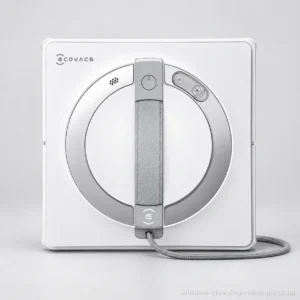
| 2. Ecovacs WINBOT MINI | 8.7/10 | $183 | 7500 Pa | 90 W | 60 ml | n/a | 30 min | 5.5 cm | n/a | 63 dB | n/a |
| 3. Kärcher RCW 2 | 8.3/10 | $189 | 3300 Pa | n/a | 70 ml | n/a | n/a | 7.1 cm | 1.1 kg | 62 dB | n/a |
| 4. Sichler Haushaltsgeräte PR-330 (ZX7733) | 7.9/10 | $259 | 2800 Pa | 72 W | 50 ml | n/a | 25 min | n/a | 1.7 kg | 63 dB | n/a |
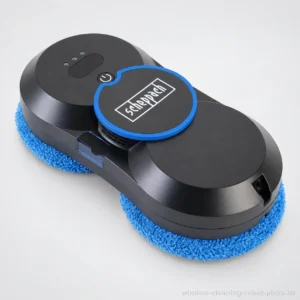
| 5. Scheppach WCR72 | 7.3/10 | $107 | 2800 Pa | 72 W | 35 ml | n/a | 20 min | 6.8 cm | 0.98 kg | n/a | n/a |
Rankings are based on our review ratings, calculated by comparing manufacturer specifications across the full catalogue.Our methodology.
The best window cleaning robot for exterior glass is one that suits your glazing and that you can position and retrieve safely. Its purpose is to reduce manual cleaning on compatible surfaces, provided the manual permits this use.
You let it maintain the glass surface while handling preparation, supervision and any finishing touches yourself. It is a useful aid when regularly cleaning large windows becomes tedious. However, the robot alone cannot solve the problem of an inaccessible pane.
Our approach is based on analysing documented specifications and operating constraints. For outdoor use, access, compatibility and safety take priority over cleaning claims.
A large, accessible picture window is a setup worth considering. A continuous surface reduces the need to move the device between panes. For a window that opens, check above all that you can reach the outside to position and remove the robot without leaning out.
The key factor is therefore the handling time relative to the cleaning delegated to the robot. For a few easily accessible panes, the purchase may offer limited benefit.
This range does not guarantee any particular suitability for outdoor use. Include replacement pads and approved cleaning fluid in your comparison as well.
A window cleaning robot for outdoor use is primarily worth considering for regular maintenance of compatible surfaces. Do not assume it will remove all accumulated deposits without preparation. Dust, pollen, splashes and ingrained dirt do not necessarily require the same treatment.
A window cleaning robot with automatic spraying can help moisten the surface as it cleans. However, this feature alone does not guarantee a streak-free finish. The condition of the pads, the cleaning product used and the preparation instructions also matter.
A fixed pane that is difficult to access is not automatically a suitable candidate. Without a safe way to position and retrieve the device, consider using a cleaning pole from a secure position or hiring a professional.
Also avoid using it when there is no suitable anchor point, the area below cannot be secured or the weather falls outside the permitted conditions. A window cleaning robot with a backup battery does not remove the need for these precautions. Check the manual for the procedure to follow if power is lost.
To continue, explore the selection on this page based on your actual setup. First, shortlist appliances with documented compatibility and recovery requirements, then compare their features and maintenance costs.
The best window-cleaning robot for exterior windows is one that suits your glazing and that you can position, secure and retrieve without putting yourself at risk. Before comparing cleaning functions, check these requirements in the manual. A window that is difficult to reach does not automatically become accessible with a robot.
| Configuration | What to check | Common mistake |
|---|---|---|
| Window that opens | Compatible dimensions and safe access to the outside surface | Having to lean outside to position the robot |
| Large pane of glass | Power supply reach and ability to retrieve the robot | Choosing solely based on the area to clean |
| Small panes | Minimum dimensions for each surface specified in the manual | Relying solely on the robot’s dimensions |
| Fixed exterior window | Access for positioning, anchoring and removal | Counting on the robot to solve access problems |
| Frameless or sloping glass | Explicit approval for this configuration | Assuming edge detection means universal compatibility |
Measure each pane separately. Note any handles, raised seals and dividers that could obstruct movement. Also check restrictions regarding the glass and any coatings it may have.
Compatibility must be explicitly documented, particularly for sloping or frameless surfaces. If the product listing is vague, request the manual before buying. An edge detection function alone does not establish compatibility with every configuration.
Assess how the robot stays attached to the glass, its edge detection, its safety cord and the procedure to follow if it stops. None of these features removes the need to follow the manufacturer’s installation requirements.
For a window-cleaning robot with a safety cord, identify an anchor point that meets the manual’s requirements in advance. Check the cord routing and adjustment instructions. An available handle is not necessarily a suitable anchor point.
Plan how to retrieve the robot before starting it. Can you remove the device if it stops far from its starting point? Can you secure the area below? If these conditions cannot be met, choose another method or use a professional.
Finally, check the restrictions concerning rain, wind, humidity and temperature. Without clear guidance, do not assume outdoor use is permitted in all weather conditions.
The choice depends on the route between the power source and the glass. For a corded device, check the usable cable reach and connection requirements. The route must accommodate any openings and obstacles.
A backup battery does not mean the device can operate independently. For a window-cleaning robot with a backup battery, look for the stated hold time, alerts and removal procedure. Do not rely on this reserve to finish cleaning.
Compare navigation, stated coverage, spraying and cleaning pads. Suction power alone does not establish better streak removal. Look especially for information on areas left uncleaned along the edges and the number of passes required.
For outdoor use, distinguish routine cleaning from stubborn deposits. Do not choose a device on the assumption that it will remove all dirt. Check the recommended preparation and restrictions concerning abrasive deposits.
Choose pads that are easy to replace and available separately. Dirty pads can spread dirt around: maintaining them matters as much as the advertised modes. Also check which cleaning liquid is permitted and the instructions for dampening the pads.
For a large window, examine the information on coverage of large surfaces. For several small windows, focus instead on the handling required between panes. Allow for possible manual finishing along accessible edges.
These ranges, based on an analysis of Google results, provide a general guide. They are neither an exhaustive survey nor verified prices for this collection.
Compare the cost of the complete setup. Check the included pads, the price of compatible refills, spare parts availability and warranty terms. A cheaper device becomes less appealing if its consumables become unavailable.
Make sure each extra cost is justified by your needs: easier setup, suitable reach or simpler maintenance. An additional feature is worth its cost if it addresses a real constraint in your home.
Decide in this order: compatibility, safety, power supply, cleaning, budget. Rule out any device if you are unsure how to install or retrieve it. Then choose between the options based on your windows and ease of maintenance, without letting claims of power replace these checks.
The most effective model is one with documented compatibility with your glazing and a cleaning system suited to the dirt present. Compare edge coverage, navigation and pad maintenance rather than suction power alone. A window-cleaning robot with automatic spraying helps keep the glass moist as it moves, but does not guarantee the removal of stubborn deposits. The information provided does not establish that any model is superior for all outdoor uses.
The best choice depends on your windows and your ability to position and retrieve the device safely. For a large window, examine coverage and the usable reach of the power supply. For small panes, check the minimum compatible dimensions in the manual. With several separate windows, manually moving the robot between them also matters. An inaccessible fixed window may make the purchase unsuitable, even if the device has edge detection.
The available information does not support recommending a robot for intensive professional use. A domestic window-cleaning robot does not become suitable for facade cleaning simply because it has powerful suction or a portable station. For this purpose, require documented suitability for professional use, precise operating conditions and maintenance requirements compatible with the intended frequency of use. If you need to clean an inaccessible facade, have the job assessed by a professional equipped to access it.
No brand can be identified as the most reliable based on the sources provided. They do not document durability or breakdowns sufficiently to establish a sound comparison. Before buying, check the availability of pads and spare parts, warranty terms and access to after-sales service. Clear instructions on outdoor use and retrieval procedures are also a practical selection criterion.
Postpone cleaning in rain or wind unless the manual explicitly allows use in these conditions. A statement that the device is suitable for outdoor use does not mean it can withstand all weather conditions. Check restrictions concerning moisture, temperature and exposure of electrical equipment. Without specific instructions, choose dry, calm conditions. The safety cord does not make it acceptable to use the device against the manufacturer's instructions.
You must be able to position, secure and retrieve the robot from a safe location, including if it stops in the middle of the pane. Check this access before buying, then identify an anchor point that meets the manual's requirements and secure the area below. The robot alone cannot solve an access problem. If handling it requires leaning dangerously out over a drop, opt for a pole from a safe location or professional assistance.
Yes, but only if the model's manual explicitly permits the configuration concerned. Edge detection alone does not prove compatibility with frameless glazing, and that compatibility does not automatically extend to an angled surface. Also check minimum dimensions, seals, coatings and anchoring options. A general marketing claim is no substitute for instructions suited to your glazing, particularly for a roof window.
This depends on the system provided by the manufacturer. A window-cleaning robot with a backup battery may temporarily maintain its grip after a power cut, under the conditions specified in its manual. Maintaining its grip does not mean cleaning continues and does not remove the need for a safety cord. Check the required charge, the stated holding time and the retrieval procedure before each use. You must be able to retrieve the device without putting yourself at risk of falling.