Best window cleaning robot powered by a battery-powered station with cable 2026, top picks and comparison
Assess access to your windows with a window-cleaning robot powered by a battery station via a cable. See the buying guide further down the page to choose according to your windows and installation constraints.
Prices collected from retailers are for guidance only: they may have changed since, the current price is the one shown by the retailer. No price is shown for models sold only on Amazon. Amounts converted from reference prices in euros using a dated exchange rate.
How we picked these models
- 2 models selected because they have the feature “Battery-powered station with cable” according to data published by manufacturers and retailers.
- See how we rate →
- No brand pays to be included in this selection or to rank higher.
Our guides to window-cleaning robot
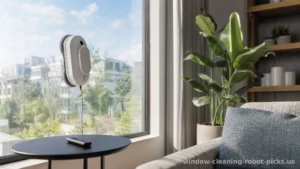
Why choose a window-cleaning robot powered by a battery station via a cable?
How does a robot connected to a battery-powered station work?
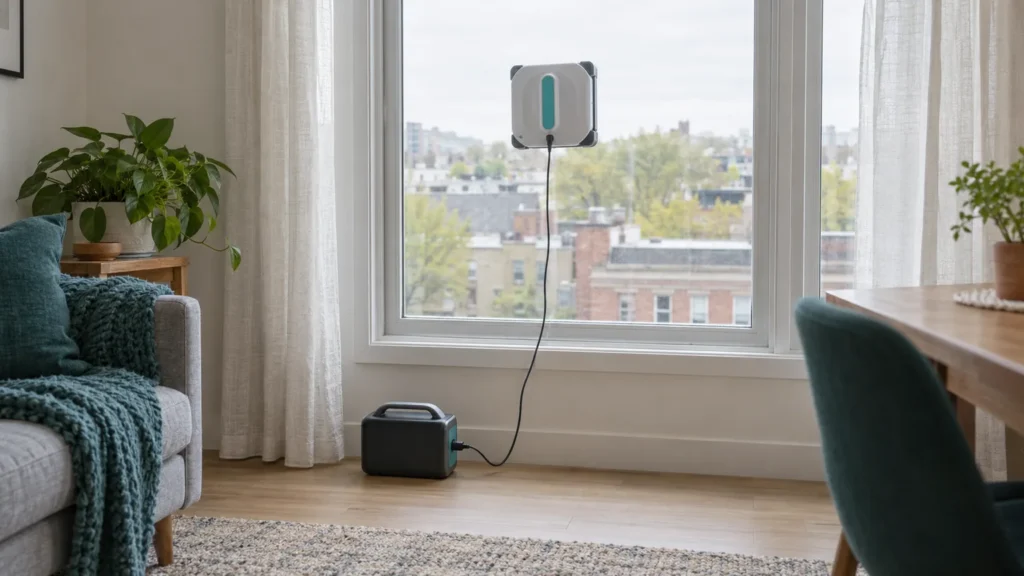
A window-cleaning robot connected by cable to a battery-powered station draws its power from the portable station. This allows you to clean without a power socket near the window, while maintaining a power cable connection between the station and the robot.
This setup differs from an onboard battery that powers the device directly. It should not be confused with a backup battery either, which temporarily keeps the robot safely attached if the main power supply is interrupted. A reference to a “built-in battery” is therefore not enough to identify the type of operation you are looking for.
When choosing, check that the station actually powers the cleaning process and is included in the version being sold. The word “station” alone does not tell you what it does.
Which homes benefit from a portable station?
This solution is particularly suitable for homes where power sockets are far from the windows. It can make cleaning easier to organise when moving between several rooms or maintaining large panes of glass. However, its usefulness depends as much on how easy the whole setup is to move as on the stated battery life.
The deciding factor remains the usable cable length. The cable must follow the actual route between a permitted location for the station and the furthest point on the glass, accounting for any obstacles.
- For a large pane of glass, check whether the cable can reach the furthest corners.
- For several rooms, assess how easy the whole setup is to move and store.
- For a window-cleaning robot intended for exterior windows, check the permitted surfaces and operating conditions in the manual.
The station makes supplying power easier, but it does not overcome access difficulties when placing or retrieving the robot.
What do you still need to do during cleaning?
Movement across the glass can be automated, but several tasks still require your involvement, depending on the device. In particular, you need to be able to position the robot, follow the safety instructions and move it between separate panes.
- Prepare the pads and cleaning solution according to the manual.
- Position the station and cables so they do not obstruct movement.
- Follow the anchoring and supervision instructions.
- Retrieve the robot, then care for the consumables.
A battery-powered station guarantees neither unsupervised operation nor a perfect finish. Edges and corners deserve particular attention when choosing. Also allow for possible manual touch-ups, without assuming that suction power alone establishes cleaning quality.
When is another solution a better choice?
If a power socket is easily accessible near your windows, a mains-powered device is worth comparing. For a few small panes or occasional cleaning, manual cleaning may require less preparation than setting up a robot.
If your main priority is an inexpensive window-cleaning robot, assess how useful the station would actually be in your home. Across entry-level, mid-range and high-end models, compare documented features, included accessories, pad availability and warranty terms. These factors help you assess the overall cost without suggesting an uncertain price range.
Then browse the selection on this page, prioritising models whose power supply, cable reach and compatibility with your windows suit your needs.
How do you choose a window-cleaning robot with a battery station and cable?
The best window-cleaning robot powered by a battery station via a cable is one that can reach your windows, operate on them under the permitted conditions and be retrieved easily. Before comparing cleaning features, check how the robot is actually powered, the cable’s usable reach and window compatibility. These criteria determine whether this setup suits your home.
Does the battery actually power the cleaning?
The station you are looking for supplies the robot with the power needed for cleaning through a cable. A backup battery serves a different purpose: temporarily maintaining safety when the main power supply is interrupted, as specified by the manufacturer. Its presence therefore does not prove that the robot can clean without a mains socket.
Look in the specifications and manual for an explicit statement that the station can power the robot from its battery. Also check exactly what is included with the version being sold: a similar name does not guarantee identical accessories. A charging station is not necessarily a portable power supply that can be used during cleaning.
Can the cable reach the entire pane?
Measure the route from the planned station position to the furthest point on the glass. Allow for routing around the frame, obstacles and the robot’s movement. The straight-line distance is not enough: the cable must follow the robot’s route without being pulled taut.
Check that the station can remain in a position that complies with the manual throughout the session. For an exterior surface, also check how the cable passes through the opening. Do not plan to use an extension cable or an additional connector without explicit authorisation from the manufacturer.
Finally, distinguish between the power cable and the safety cord. They serve different purposes; their presence and installation must be checked separately.
Is the robot suitable for your windows?
Measure each framed glass surface, then compare its dimensions with the minimum dimensions permitted. For small windows, this check takes priority over battery life. For a large window, focus on cable reach and the access needed to place and retrieve the device.
- For frameless glass, require explicitly documented compatibility.
- For sloping surfaces, do not assume that approval for vertical glass also applies.
- For textured, treated or other specialised glass, check the restrictions on surfaces and cleaning products.
If you are looking for a window-cleaning robot for exterior windows, also check the permitted operating conditions. A portable station alone does not solve access or retrieval difficulties.
How can you assess cleaning quality?
Suction power alone does not demonstrate cleaning quality. To choose, examine the available information on movement patterns, edge coverage, pads and spraying, where this feature is available. A general promise of spotless windows tells you less than a precise description of how the robot works.
Also consider the steps required before and after each pass: preparing the surface, dampening it if necessary, and replacing or washing the pads. If detailed feedback is available, prioritise accounts that specify the type of glass and its initial condition. Allow for possible manual finishing around the edges rather than assuming they will be cleaned completely.
Are the battery life and safety features suitable for your cleaning session?
Only compare battery runtimes when their purpose and conditions are specified. A safety hold time cannot be compared with a cleaning runtime. Do not convert a runtime into a cleaned surface area without documented guidance either.
Picture your entire cleaning session: setup, cleaning passes, moving between windows and pad maintenance. Check the charging time and whether mains operation is possible. The latter must be confirmed for your chosen version.
Before buying, consult the anchoring instructions, alerts and procedure for a low battery. You must be able to retrieve the robot safely. The presence of a station does not mean you can assume unattended use is permitted.
Which product tier meets your needs?
Choose your product tier based on the practical constraints it addresses. High-end equipment is only worthwhile if its documented features genuinely make cleaning easier. Equally, looking for a window cleaning robot at an affordable price makes sense if the device meets your power, reach and compatibility requirements.
Include the availability of pads, spare parts and approved cleaning fluid, as well as warranty terms, in your comparison. Without reliable market data, a numerical price range would not provide a sound reference point.
| Criterion | What to look for | Common mistake |
|---|---|---|
| Power supply | Cleaning powered by the station’s battery | Confusing operating power with backup power |
| Reach | Enough cable for the entire route without tension | Measuring only in a straight line |
| Glazing | Explicitly confirmed compatibility | Assuming compatibility with every surface |
| Maintenance | Available consumables and manageable maintenance | Comparing only advertised features |
Mistakes to avoid
- Interpreting “cordless” as meaning there is no cable between the robot and the station.
- Choosing before measuring the glazing and the cable route.
- Assuming the station replaces the required safety device.
- Overlooking the handling required between windows.
Key takeaways
Check your actual setup first, then compare ease of cleaning. A battery-powered station becomes useful when it lets you work away from power sockets while staying within the robot’s reach, compatibility requirements and safety instructions.
What should you know before choosing a window-cleaning robot with a station?
Which window-cleaning robot is most effective with a battery-powered station?
The best choice depends on your glazing and the cable’s reach; no model can be called the most effective based on suction power alone. Compare surface compatibility, edge cleaning and pad maintenance. For an Ecovacs window-cleaning robot as with any other brand, make sure the version you choose has a station that can power cleaning from its battery. The presence of a station alone does not confirm this.
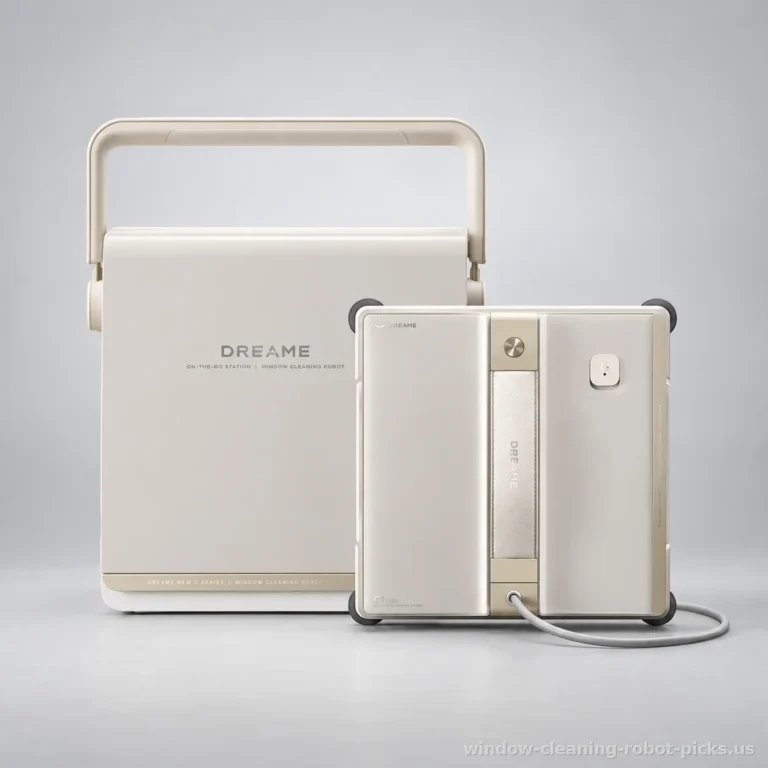
What is the difference between Dreame C1 and C1 Station?
The exact difference between Dreame C1 and C1 Station needs to be confirmed in their official specifications; the product names alone do not establish what equipment each includes. Check whether a station is included, what it does and whether it can power the robot without a mains socket during cleaning. Also compare the cable, included accessories and charging arrangements. Do not assume that cleaning functions or safety equipment are identical across versions.
Is a window-cleaning robot with a battery-powered station really cordless?
No, in this configuration, the robot remains connected to the station by a power cable. The station’s battery supplies the power needed to operate, allowing you to clean away from a mains socket. The term “cordless” can therefore be misleading. Before choosing, check the cable length and the restrictions on where the station can be placed. Mobility depends on the available route between the station and the glass.
What is the difference between a backup battery and a battery that powers cleaning?
A battery used as the power supply provides the energy needed for cleaning, whereas a backup battery handles a power interruption according to the functions specified by the manufacturer. It does not guarantee that the robot will continue its cycle. When reading the documentation, distinguish between cleaning runtime and the time the robot can remain safely attached. The words “built-in battery” alone do not tell you whether you can use the appliance away from a mains socket.
How can you check that the cable will reach the entire window?
Measure the route between a permitted position for the station and the farthest point of the window, taking obstacles into account. Compare this route with the usable length stated by the manufacturer, allowing enough slack in the cable. Also check the route around the frame and the movement needed to cover the entire surface. The safety cord serves a different purpose: its length does not indicate the reach of the robot’s power supply.
Can you use a window-cleaning robot with a station on frameless glass?
Yes, but only if the manufacturer explicitly permits the model to be used on frameless glass. A battery-powered station does not guarantee this compatibility. Check restrictions on edges, glass dimensions and angle, along with instructions for securing the robot. If you are also looking for a window-cleaning robot for exterior windows, check the outdoor operating conditions separately: permission to use it on frameless glass does not automatically cover every outdoor situation.
What should you do if the station’s battery runs out during cleaning?
Follow the manufacturer’s retrieval procedure as soon as the low-battery warning appears, without waiting for the station to stop. Do not improvise by disconnecting or pulling on the cable to retrieve the robot. A backup battery, if fitted, does not guarantee continued cleaning. Before each session, check the available charge and make sure you can retrieve the appliance from a safe position, following the manual.
Does a battery-powered station remove the need for a safety cord?
No, a battery-powered station does not remove the need to use the safety system specified by the manufacturer. The power supply and fall protection serve different purposes. Do not treat the power cable as a safety tether unless the manual explicitly says you can. Check the permitted anchor point, the condition of the safety system and its installation before starting. The presence of a station alone does not justify unattended use.