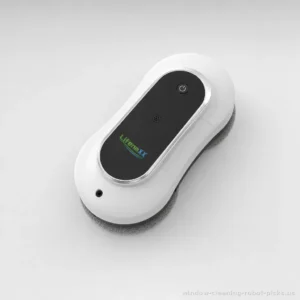
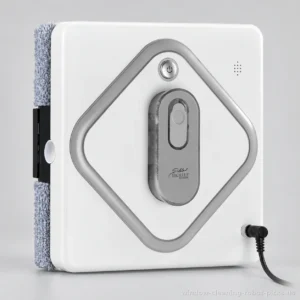
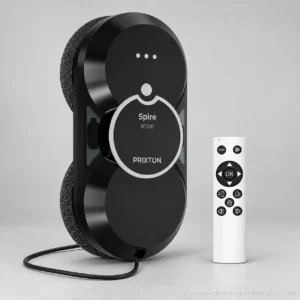
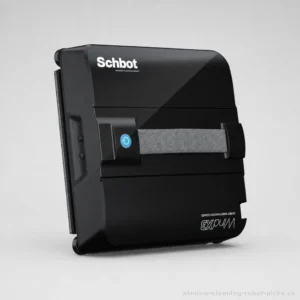
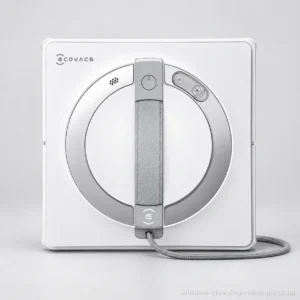
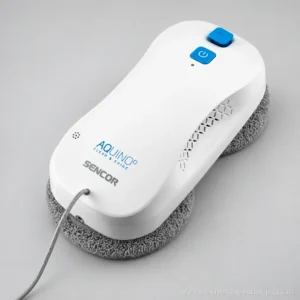
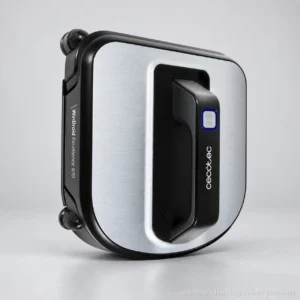
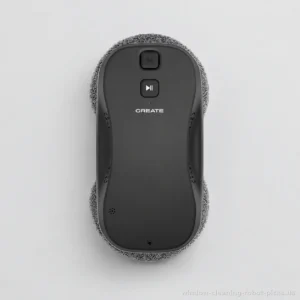
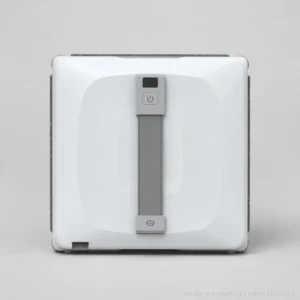
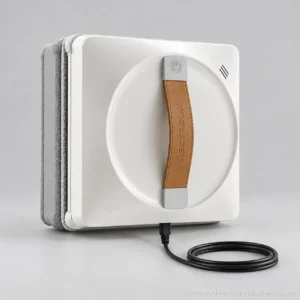
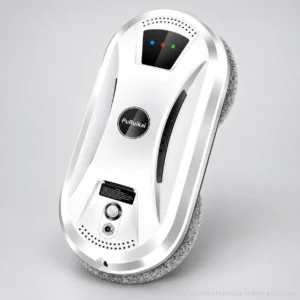
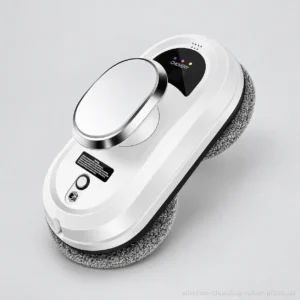
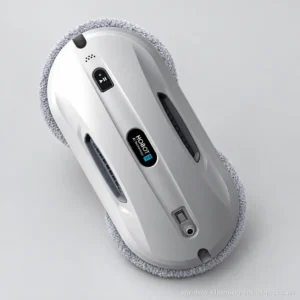
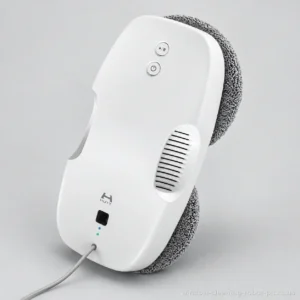
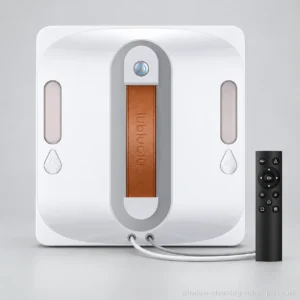
Lubluelu CHYW201
Top-ranked for water tank capacity.
Read the review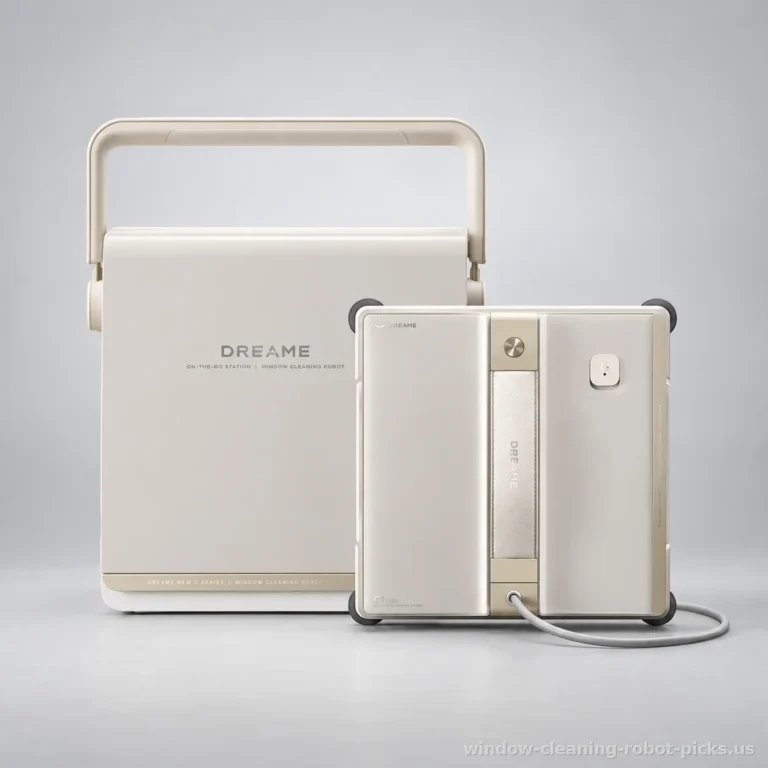 Our rankingsThe best window-cleaning robots27 window-cleaning robots
By power supply during cleaning
By manufacturer's intended use
By indoor / outdoor cleaning
By compatible surfaces
Features and options
Our guides to choosing
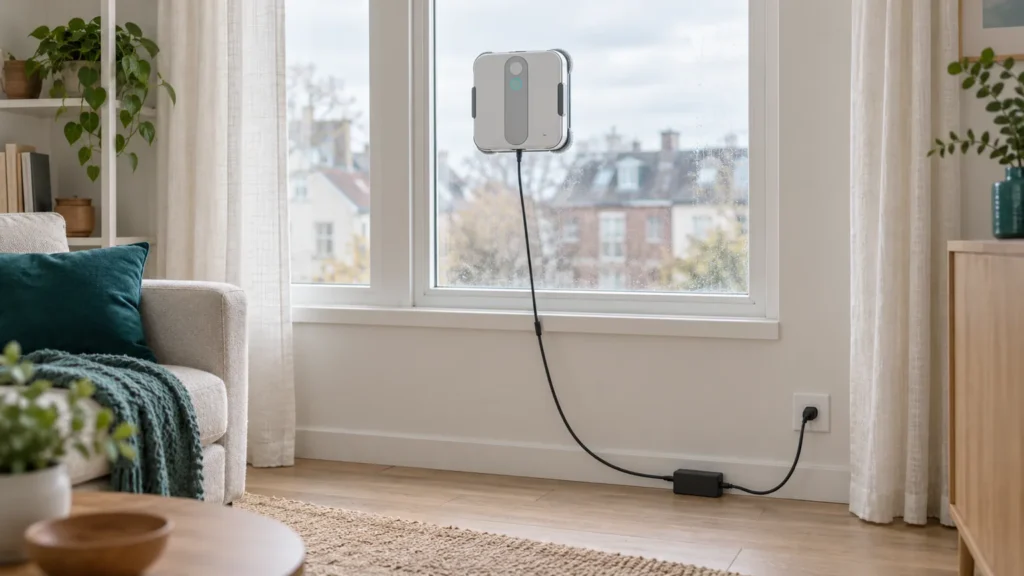
A large window gathering dust week after week because there is no time to get the ladder out is just the job for a mains-powered window cleaning robot, which we cover in the buying guide below.
Prices collected from retailers are for guidance only: they may have changed since, the current price is the one shown by the retailer. No price is shown for models sold only on Amazon. Amounts converted from reference prices in euros using a dated exchange rate.
Top-ranked for water tank capacity.
Read the review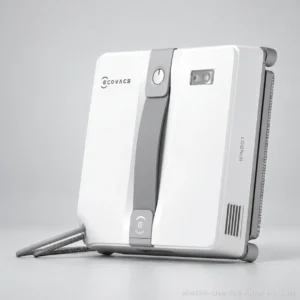
Top-ranked for suction pressure.
Read the review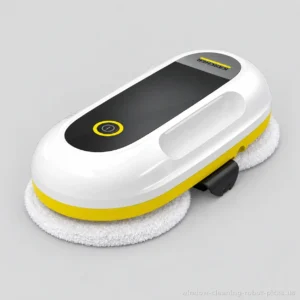
Key strength: water tank capacity, rated 8.7/10.
Read the review| Rankings | Rating | Price | Suction pressure | Electrical power | Water tank capacity | Battery-powered cleaning runtime | Backup battery holding time | Robot height | Robot weight | Noise level | Operating radius |
|---|---|---|---|---|---|---|---|---|---|---|---|
| 1. Lubluelu CHYW201 | 9/10 | n/a | 6500 Pa | n/a | 160 ml | n/a | 30 min | n/a | n/a | n/a | n/a |
| 2. Ecovacs WINBOT MINI | 8.7/10 | $183 | 7500 Pa | 90 W | 60 ml | n/a | 30 min | 5.5 cm | n/a | 63 dB | n/a |
| 3. Kärcher RCW 2 | 8.3/10 | $189 | 3300 Pa | n/a | 70 ml | n/a | n/a | 7.1 cm | 1.1 kg | 62 dB | n/a |
| 4. Lifenaxx LX-055 | 8.2/10 | $139 | 2800 Pa | 72 W | 70 ml | n/a | 20 min | 8.2 cm | 1.16 kg | n/a | n/a |
| 5. Sichler Haushaltsgeräte PR-330 (ZX7733) | 7.9/10 | $259 | 2800 Pa | 72 W | 50 ml | n/a | 25 min | n/a | 1.7 kg | 63 dB | n/a |
Rankings are based on our review ratings, calculated by comparing manufacturer specifications across the full catalogue.Our methodology.
A window-cleaning robot is more than another gadget in the cupboard: it solves a very practical problem. Large panes of glass that are hard to reach, high up or on an exterior façade are something nobody wants to clean with a squeegee once a month. You still need to choose the right power system, understand what the device can actually clean, and know what keeps it secure on a first-floor window.
Mains power has a clear advantage: suction stays constant from the start to the end of the cycle, without the gradual loss of power seen in some models as their battery runs down. On a large picture window or several windows in succession, that consistency matters as much as the stated raw power. The trade-off is familiar: you have to manage a cable, considering its length and routing as the device moves. Some models address this constraint differently, using a battery-powered station connected by cable, an alternative worth considering if access to a socket near the window is difficult.
Not all glazing is equally suitable for a suction-based robot. The criteria most commonly listed in manufacturers' specifications are:
This is also where a window-cleaning robot for exterior glass differs from a device used exclusively indoors, with higher requirements for grip and safety.
This is the question buyers search for most often, and with good reason. 2 technical features make the difference: a safety strap secured to an anchor point, which physically holds the device, and a built-in backup battery, which maintains suction for a few minutes during a power cut, giving you time to retrieve the device safely. On a mains-powered robot, this backup battery is more than an extra: it is a non-negotiable safety requirement to check before buying any model for use on upper floors.
The real benefit becomes clear over time: regular use, monthly or twice a month depending on how exposed the windows are, takes over a physically demanding chore. There are still limitations, however: a window-cleaning robot does not replace targeted manual cleaning of corners, tracks or stubborn stains.
To help you weigh these criteria, the selection below highlights mains-powered models whose technical specifications are best suited to safe, regular use.
With a mains-powered window-cleaning robot, everything comes down to a simple trade-off: constant suction and a cable to manage. That balance should guide your choice far more than the brand on the box.
The main advantage of a mains-powered model is that its suction never weakens during the cleaning cycle, unlike a window-cleaning robot connected by cable to a battery-powered station, whose power can decline as the battery runs low. For a large window, a conservatory or glazing exposed to wind, that consistency makes all the difference: the robot needs to maintain its grip from start to finish, without fluctuations. On small, standard windows, the difference is less noticeable, but it is still preferable to choose a device whose suction is stated to remain stable throughout cleaning rather than gradually weaken.
A robot that loses suction high up risks falling and damaging the glass. Always check 2 things before buying:
Without a backup battery, a simple power cut or an accidentally unplugged cable can cause the device to fall. Consistent user feedback identifies this as the most sought-after technical feature in this type of product, and it deserves priority over more superficial criteria such as design.
The cable is the main limitation of a mains-powered model. Before buying, measure the actual height and width of your largest windows, then compare these with the cable length stated by the manufacturer, allowing a safety margin. A cable that is too short requires an extension lead, which complicates cleaning and can obstruct the robot's path. A good device also includes a cable management system that prevents the cable from catching on a window corner or getting trapped behind the device as it moves. Technical specifications rarely explain this in detail, even though it directly affects everyday ease of use.
Not all window-cleaning robots are suitable for every surface. Before buying, check these 3 points:
For a conservatory or large glazed areas with multiple panes separated by frames, a robot that can handle transitions or be repositioned easily is preferable to a model designed for a single large, continuous surface.
There are 3 control options on the market. A remote control remains the easiest to get to grips with and works without a smartphone. A mobile app generally lets you program cleaning paths, monitor the cycle in real time and activate an emergency mode remotely if something unexpected happens. Buttons on the device itself are sufficient for basic use but offer limited fine control over cleaning paths on a large window. For occasional use, a remote control is more than adequate. For numerous windows or complex glazing, an app makes operation considerably easier.
| Range | What you generally get | Best suited to |
|---|---|---|
| Entry-level | Adequate suction, button controls or a simple remote control, basic fall protection | Small areas, occasional use, a limited budget, similar to a budget window-cleaning robot |
| Mid-range | Stable suction, reliable backup battery, basic mobile app | Regular use on medium-sized windows, a good overall balance |
| High-end | Advanced cable management, programmable cleaning paths, enhanced obstacle and edge detection | Large areas, conservatories, multiple panes or exposed glazing |
A good mains-powered window-cleaning robot should be judged first on safety, especially its backup battery and safety strap, then on suction consistency and everyday cable management. Compatibility with your windows must be checked before buying, including seals, thickness and tint. The control method should then be chosen according to how often you use it and the complexity of your glazing. Whether choosing an entry-level model suitable for occasional use or a more fully featured version for demanding surfaces, safety should always take priority over convenience.
No, most window-cleaning robots require a smooth, flat surface with no seals or protruding frames that could interrupt suction. Standard windows, large glass panes and conservatory glazing are generally suitable. However, thick seals, textured glass or a frame very close to the edge can prevent the device from attaching properly or reaching the edge.
This is the main concern with a mains-powered model. If the power goes out or the device is accidentally unplugged, the suction holding it against the glass disappears instantly. This is why a built-in backup battery is considered essential: it takes over for a few minutes, giving you time to retrieve the device safely, often alongside a safety strap secured to an anchor point.
It is advisable to remove dust and coarse dirt before placing the device on the glass, otherwise you risk scratching the surface or quickly clogging the cleaning pads. Most models then use their own system to spray water or cleaning solution during the cycle, so there is no need to wet the surface yourself beforehand.
There is a risk, but it remains low if the device is properly equipped and used correctly. Fall protection relies on 2 complementary elements: continuous suction holding the robot against the glass, and a strap attached to a fixed anchor point. Without these 2 safeguards together, it is best to avoid using the device at height, particularly on exterior glass.
A mains-powered window-cleaning robot maintains constant suction throughout the cycle, with no loss of power caused by a draining battery, but requires you to manage a cable during cleaning. By contrast, a window-cleaning robot connected by cable to a battery-powered station offers greater freedom of movement, at the cost of limited runtime and power that may decline towards the end of the cycle.
Not entirely. It handles large, flat surfaces and regular cleaning effectively, but is less suited to corners, edges and heavily soiled areas, which still need occasional manual cleaning. It mainly saves time on routine maintenance, rather than providing a single solution for every situation.
This is something to check before buying, as some manufacturers advise against use on tinted or film-coated glass, since suction can weaken or peel off the film over time. Manufacturer specifications indicate that compatibility varies between models: it is best to check the exact specifications of the robot you are considering rather than rely on a general rule.
The microfibre pads can generally be removed after each use and rinsed with clean water, then occasionally machine-washed at a low temperature. Dirty pads reduce cleaning performance and can leave streaks on the glass. Keeping a spare set also allows you to continue cleaning if the pads wear out prematurely.