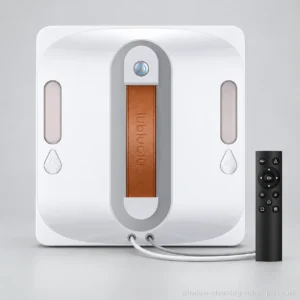
Lubluelu CHYW201
Top-ranked for water tank capacity.
Read the review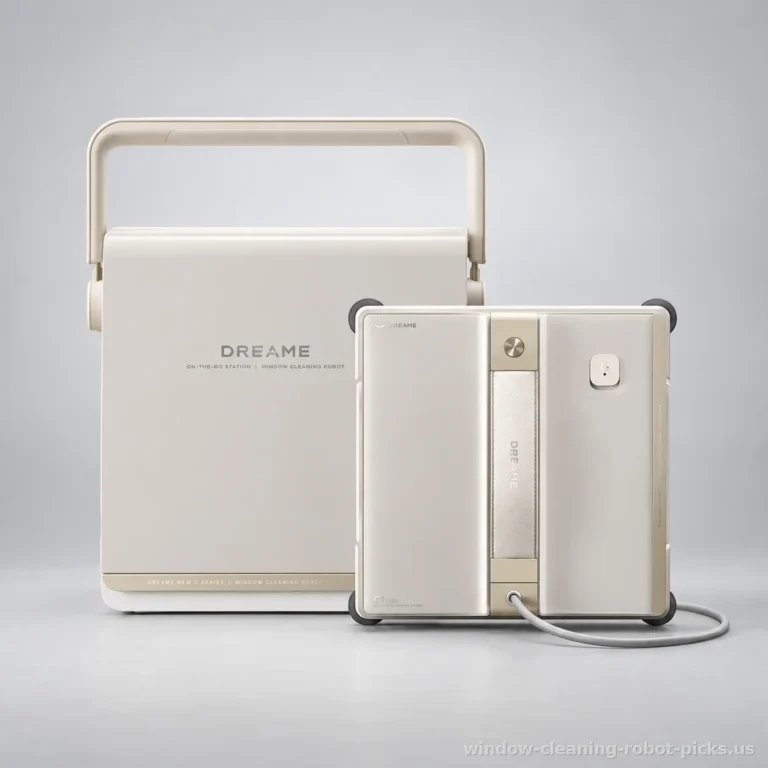 Our rankingsThe best window-cleaning robots27 window-cleaning robots
By power supply during cleaning
By manufacturer's intended use
By indoor / outdoor cleaning
By compatible surfaces
Features and options
Our guides to choosing
If you have several windows, a dual-spray window cleaning robot is worth considering; for occasional cleaning of a small area, its benefits remain limited. The buying guide below helps you decide whether this equipment meets your needs.
Prices collected from retailers are for guidance only: they may have changed since, the current price is the one shown by the retailer. No price is shown for models sold only on Amazon. Amounts converted from reference prices in euros using a dated exchange rate.
Top-ranked for water tank capacity.
Read the review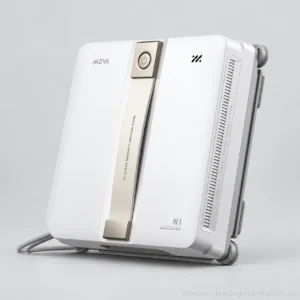
Top-ranked for suction pressure.
Read the review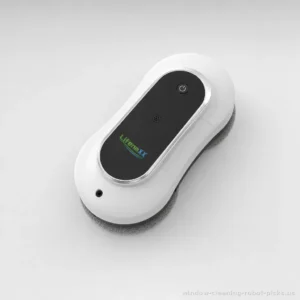
Top-ranked for equipment.
Read the review| Rankings | Rating | Price | Suction pressure | Electrical power | Water tank capacity | Battery-powered cleaning runtime | Backup battery holding time | Robot height | Robot weight | Noise level | Operating radius |
|---|---|---|---|---|---|---|---|---|---|---|---|
| 1. Lubluelu CHYW201 | 9/10 | n/a | 6500 Pa | n/a | 160 ml | n/a | 30 min | n/a | n/a | n/a | n/a |
| 2. Mova N1 | 8.9/10 | $236 | 8000 Pa | n/a | 120 ml | n/a | 30 min | 5.9 cm | 1.3 kg | n/a | n/a |
| 3. Lifenaxx LX-055 | 8.2/10 | $139 | 2800 Pa | 72 W | 70 ml | n/a | 20 min | 8.2 cm | 1.16 kg | n/a | n/a |
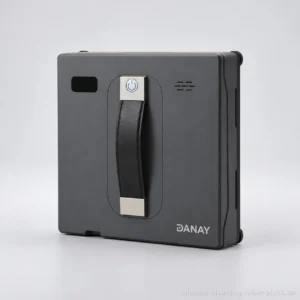
| 4. Danay W8 Pro | 8.7/10 | $269 | 3000 Pa | n/a | n/a | n/a | 40 min | n/a | n/a | n/a | n/a |
Rankings are based on our review ratings, calculated by comparing manufacturer specifications across the full catalogue.Our methodology.
A dual-spray window-cleaning robot moistens the surface as it moves to support the cleaning pad as it passes. Its purpose is to distribute liquid during cleaning, without you having to moisten the surface yourself on every pass. It may suit homes with several windows or large glass doors where cleaning them becomes a repetitive task.
However, these terms cover different features. Dual jet, dual nozzle and dual misting do not necessarily describe the same spray pattern. Nor do they indicate the direction of the nozzles or the amount of liquid applied. The best dual-spray window-cleaning robot is therefore the one whose settings and limitations suit your windows.
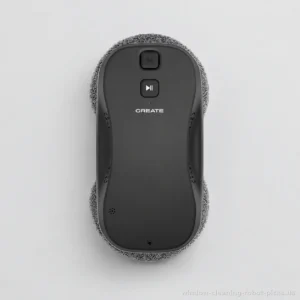
Some models let you adjust this moisture application. The Create WIPEBOT PRO, for example, specifies 2 spray levels. This setting is a practical selection criterion if you want to adjust the amount of liquid applied. However, it does not, on its own, demonstrate better cleaning performance.
The main benefit of a domestic window-cleaning robot is to delegate the passes across the glass surface. The device moves across the glass, wiping it with its cleaning pad. This assistance may appeal to people who want to reduce repetitive movements, particularly in homes with extensive glazing.
You still need to prepare the device, fill the tank, fit a clean pad and move the robot between windows. You must also plan how to retrieve it and follow the manufacturer's supervision instructions. For a mains-powered window-cleaning robot, access to a socket and cable routing are constraints to consider in advance.
The range includes entry-level, mid-range and high-end options. Moving up the range may provide additional controls or settings, but the right equipment depends on your needs. An app or voice guidance cannot replace compatibility with your glazing.
Moistening the glass and removing dirt are complementary functions. Dual spraying supports cleaning but does not guarantee the removal of stubborn deposits. The condition of the pad, the permitted cleaning liquid and surface preparation also matter. A pad already loaded with dirt can compromise the expected result.
Corners also deserve your attention. Additional nozzles do not demonstrate that the device reaches every corner. Likewise, automatic navigation alone does not establish compatibility with frameless windows. The operating conditions must be checked for each model, without treating a marketing promise as a guaranteed result.
The selection on this page helps you compare documented features and their limitations. First identify the models suited to your windows, then choose between them based on the spraying features, safeguards and controls that will actually be useful to you.
The best dual-spray window-cleaning robot depends mainly on your windows, the safety features included and the moisture settings. Based on an analysis of the specifications, the Create WIPEBOT PRO deserves your attention for its adjustable spray, the Lifenaxx LX-055 for its documented features and the Mova N1 for its compact size. No single feature guarantees streak-free windows.
Start by comparing the features that matter in your home. An additional remote control cannot make up for incompatibility with your windows.
| Model | Listed price |
|---|---|
| Create WIPEBOT PRO | Check the retailer for the price |
| Lubluelu CHYW201 | Check the retailer for the price |
| Lifenaxx LX-055 | Check the retailer for the price |
| Mova N1 | Check the retailer for the price |
| Elkios Essentiel | Check the retailer for the price |
| Danay W8 Pro | Check the retailer for the price |
| Clariva Ultra | Check the retailer for the price |
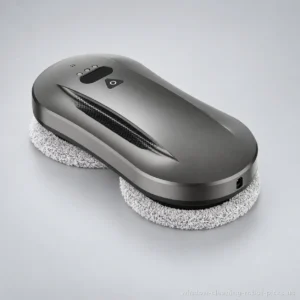
The Lubluelu CHYW201 stands apart. Its misting function is described, but dual spraying is not explicitly confirmed. Only consider it for this requirement after checking.
Dual jet, dual nozzle and dual misting describe how liquid is distributed, without indicating which cleans better. Prioritise moistening that follows the manufacturer's instructions over promises of spotless results.
The Create offers 2 spray levels to adjust the amount of liquid applied. Documented capacities are 60 ml for the Create, 70 ml for the Lifenaxx and 120 ml for the Mova. The Lubluelu advertises 160 ml, subject to confirmation of its spraying system.
A larger tank may mean fewer refills, but it does not indicate how much surface area can be covered. Consumption is not documented. The condition of the cleaning pads and the dirt also affect the result.
Measure each pane and the clearance in front of it. Handles, shutters and other obstacles may block its path. The Mova has a stated thickness of 59 mm, compared with 70 mm for the Elkios. This alone does not confirm compatibility with your setup.
Check which surfaces are explicitly approved. The Lifenaxx specifically mentions windows, mirrors and tiles. Do not assume the other models offer the same versatility.
For frameless windows, look for explicit confirmation. Sensors or laser navigation do not prove compatibility. Likewise, more programmes do not demonstrate better coverage of edges or corners.
Assess adhesion, the backup battery and the safety rope together. Also check that you have a suitable anchor point as required by the instructions. An advertised suction level is never an absolute guarantee against falling.
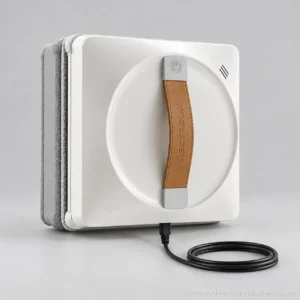
The backup battery keeps the robot attached during a power cut. Its runtime should not be confused with cordless cleaning time. For a mains-powered window cleaning robot, check the power cord reach and the rope length separately.
If you are looking for a window cleaning robot for exterior windows, also check the permitted weather conditions and whether you can safely install and retrieve the device.
At entry level, prioritise documented safety features and compatibility with your windows. In the mid-range or high-end segments, consider whether the app, voice guidance or additional settings actually meet your needs.
A remote control may be enough if you simply want to start cleaning cycles. Before buying, also check the stated noise level, the availability of cleaning pads and the after-sales service terms. These factors may matter more than an additional control option.
First, rule out devices that are incompatible with your windows or lack sufficient safety documentation. Then compare spraying, the handling required and the controls. The best choice is the one whose features meet your needs, with specifications checked before ordering.
Use only the liquid approved in your device’s manual. Dual spray does not make the nozzles compatible with every glass cleaner. Check whether the manufacturer specifies water alone or a suitable cleaning solution, along with any dilution instructions. Avoid homemade mixtures and foaming products unless explicitly approved. The liquid you choose must be suitable for both the spray system and the surface being cleaned.
Tap water is suitable only if the manual allows it. In hard-water areas, deposits can contribute to clogged nozzles and leave marks after drying. Check whether the manufacturer recommends a particular type of water, without assuming that demineralised water is always suitable. After cleaning, follow the manufacturer’s instructions for emptying and maintaining the tank. Dual misting does not remove the need for these precautions.
Stop the device, retrieve it safely and unplug it before cleaning its nozzles according to the manual. Start by checking the tank level and spray setting, as a lack of spray does not necessarily mean there is a blockage. Gently wipe any accessible outlets if the instructions allow it. Do not insert a needle or use a descaler without the manufacturer’s approval. If the problem persists, contact customer support before taking the system apart.
Remove the pads after switching off and unplugging the robot, then follow the washing and drying instructions on their labels. The permitted temperature and suitability for machine washing depend on the fabric. Avoid fabric softener, which can reduce their absorbency, and let them dry completely before storing them. Before each cleaning session, check that no abrasive debris remains trapped in the fibres. Replace pads that are worn or no longer attach securely.
Choose a shaded window and follow the temperature conditions specified in the manual. On a hot surface, the liquid can dry quickly and cause streaks before the pad passes over it. Dual spray is not guaranteed to compensate for this evaporation. For a domestic window-cleaning robot, choose a time when the glass is cooler and check the manufacturer’s restrictions before starting cleaning.
Postpone cleaning when it is raining unless the manufacturer explicitly approves use in these conditions. A window-cleaning robot intended for exterior windows is not necessarily designed to operate in the rain. Water can reach electrical components and affect adhesion. With a mains-powered window-cleaning robot, also protect the electrical connections according to the manual. The safety rope and backup battery do not make the device waterproof and do not replace the need to follow the operating conditions.