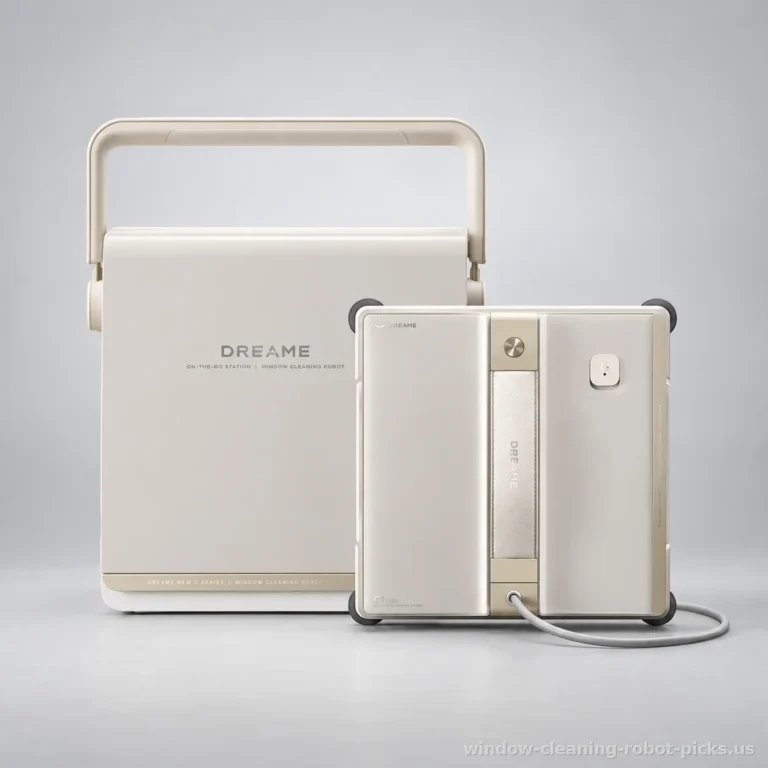
Best window-cleaning robot Hutt 2026, analysis and reviews
Struggling to choose between 10 models with different technologies? This page analyses the Hutt window cleaning robot range, identifies the key differences and helps you find the right model for your needs.
Prices collected from retailers are for guidance only: they may have changed since, the current price is the one shown by the retailer. No price is shown for models sold only on Amazon. Amounts converted from reference prices in euros using a dated exchange rate.
How we picked these models
- 1 model selected because they have the feature “Hutt” according to data published by manufacturers and retailers.
- See how we rate →
- No brand pays to be included in this selection or to rank higher.
Why are Hutt window cleaning robots so popular?
What Hutt actually offers
Hutt has established itself as a leading name in automatic window cleaning robots in Europe. The range analysed covers 10 models, positioning the brand in the mid-range to premium segment, well above low-cost devices sold without guaranteed spare parts support. Manufacturing takes place in China, as with almost all robots in this category.
What sets Hutt apart is its development of proprietary technologies across several product tiers: SLAM 4.0 navigation (S7 and S7 Plus), NAVI 7.0 navigation (R10), HydroJet spray technology on mid-range and high-end models, and brushless motors from the DDC56 upwards. These technologies deliver measurable specifications, including suction power, tank capacity and route planning, documented in the product data.
Strengths across the range
An analysis of the stated specifications across all models reveals several consistent strengths:
- Backup battery to prevent falls: available on several models, including the DDC56 and W9, it maintains suction for 25 minutes during a power outage, preventing the device from detaching from the glass mid-cycle.
- High-precision edge sensors: automatic edge and obstacle detection is built into the entire range, enabling route planning without manual intervention.
- Built-in tank and spray system: available from the DDC56 (80 ml according to product data) through to the W9 (150 ml), allowing wet cleaning without having to pretreat the surface every time.
- Automatic route planning: varies by product tier, from basic edge detection on entry-level models to intelligent SLAM 4.0 or NAVI 7.0 navigation on higher-end models.
Limitations to consider before buying
Analysis of the product data reveals practical limitations that sales literature often downplays:
- Mostly corded operation: almost the entire range requires a constant mains connection. Only the S7 Plus offers true cordless operation for 60 minutes. The so-called "backup" batteries in the other models only activate during a power outage to prevent falls; they do not support everyday cordless use.
- Variable spare parts availability: supplier data indicates that no spare parts are available for the DDC56. This is worth checking for each model if the device's lifespan is a deciding factor for you.
- A noise level of around 70 dB: reported for the DDC56 and A1 according to product data. This is comparable to a lively conversation, so bear this in mind if you use the robot in an occupied living space.
- Suitable only for smooth surfaces: windows, mirrors, smooth tiles, shower screens. Textured or uneven surfaces are not compatible.
Who the Hutt range is best suited to
The range's features suit specific user needs:
- Owners of large windows or extensive glass surfaces, for whom manual cleaning is a regular, demanding chore.
- People living in homes with high windows that are difficult to reach, where the safety rope and backup battery that prevents falls provide real peace of mind.
- Users looking to automate frequent cleaning rather than clean their windows occasionally.
- Beginners looking for an easy setup, with 1-button starting on entry-level models.
For those who want to see how Hutt compares more broadly, our analyses of the Kärcher window-cleaning robot or the Ecovacs window-cleaning robot offer a comparison of leading brands on the market. To explore the Hutt range further, the comparison table and individual analyses below will help you identify the model that suits your window layout and cleaning routine.
Our assessment of the Hutt window cleaning robot range and how it measures up
After analysing the specifications of the Hutt range in 2026, one thing is clear: this brand holds a distinctive position in the window-cleaning robot market. There are 10 models in the catalogue, with suction power ranging from 3 000 Pa (DDC56, entry-level) to 7 000 Pa (R10, top-of-the-range), and proprietary technologies on higher-end models (SLAM 4.0 navigation, HydroJet spraying, brushless motor). The range is coherent, but the differences between models are sometimes less clear than they first appear.
The first thing to understand before choosing a Hutt model is that almost all run primarily on mains power. What some product listings call a “battery” is actually an anti-fall backup battery (650 mAh, 25 minutes of runtime) designed to maintain suction during a power cut, rather than allow cordless operation. Only the S7 Plus offers a true dual mode with 60 minutes of fully cordless runtime. This distinction makes a major difference to everyday ease of use.
Another often overlooked difference is tank capacity. Most models have an 80 ml tank. The W9 increases this to 150 ml and claims coverage of up to 100 m² on a single fill. In a home with windows in several rooms, this difference directly affects the number of interruptions during a full cleaning cycle.
| Model | Recorded price | Recommended surface | Weight | Filter type | Model name |
|---|---|---|---|---|---|
| Hutt DDC56 | Check the retailer for the price | Glass | 2,32 | Cloth | DDC56 |
| Hutt C65 | Check the retailer for the price | Glass | 1000 g | HEPA | HUTT C6 |
| Hutt DDC55 | Check price at retailer | Window | 3050 g | cloth | HUTT DDC55 |
| Hutt W8 | Check price at retailer | Tiles, mirror | 1500 g | HEPA filter | N/A |
| Hutt W9 | Check price at retailer | Smooth surfaces (tiles, mirrors, hard floors) | 2,1 kilograms | Fabric | N/A |
| Hutt S7 | Check price at retailer | Glass | N/A | Dust filter | Automatic window cleaning robot |
| Hutt W10 | Check price at retailer | N/A | 2500 g | N/A | N/A |
| Hutt A1 | Check price at the retailer | Glass | 3600 g | Fabric | N/A |
| Hutt R10 | Check price at the retailer | Glass Panes, Windows, Mirrors, Wall Tiles, Smooth Glass Surfaces | N/A | Hepa Filter | R10 |
| Hutt S7 Plus | N/A | Multiple surfaces | N/A | Foam | S7 Plus |
The table above shows 3 distinct tiers in the range: models with 3 800 Pa (C65, W8, W9) for everyday versatility, models with 6 000 Pa and above (A1, S7, W10) for demanding surfaces, and the R10, which stands alone at the top with its hybrid wet/dry system and NAVI 7.0 navigation.
Strengths of the Hutt range
- Backup battery to prevent falls on most models: in the event of a power outage, suction is maintained for 25 minutes, preventing an accidental fall.
- High-precision edge sensors across the entire range, with automatic horizontal and vertical route planning even on entry-level models.
- Integrated spray system starting with the DDC56, upgraded to HydroJet technology (20 microns, every 5 seconds) on the S7, S7 Plus and R10.
- Compatible with a wide range of surfaces, including windows, mirrors, wall tiles and shower screens. The W8 is specifically designed for use in window-cleaning robot for exterior windows, according to its product specifications.
- Advanced navigation on premium models: SLAM 4.0 (S7, S7 Plus) and NAVI 7.0 (R10), with automatic return to the starting point after the cycle.
- Brushless motor on the DDC56 for a longer service life and a stated noise level of 70 dB, according to supplier data.
Weaknesses to consider before buying
- Mostly corded operation: 9 out of 10 models use a power cord, requiring an accessible socket nearby and limiting freedom of movement.
- Spare parts availability varies: according to supplier data, no spare parts are available for the DDC56, a factor to consider for long-term durability.
- Tank capacity limited to 80 ml on most models, requiring frequent refills on large surfaces (only the W9 reaches 150 ml).
- Noise level of around 70 dB listed in the DDC56 and A1 specifications: equivalent to a normal conversation and noticeable in a quiet interior.
- Use strictly limited to smooth surfaces: widened joints, textured surfaces and curved double glazing fall outside the intended scope of use.
- Incomplete data for several models (C65, DDC55, W10): retailer listings remain less comprehensive than those for flagship models, making direct comparison more difficult.
The Hutt DDC56 is the best entry point into the range
The DDC56 is the most affordable model in the range and a credible entry-level choice for anyone looking for a budget window-cleaning robot without sacrificing the essentials. A brushless motor for longevity, 3 000 Pa of suction, dual rotating discs at 150 rpm and integrated spraying make for a solid set of features. The backup battery (650 mAh, 25 min) provides protection during unexpected power outages. The main drawback is its reliance on corded power.
The Hutt W9 offers versatility with its large tank
The W9 stands out with its 150 ml tank, the largest in the range, and a claimed cleaning coverage of up to 100 m² on a single fill. Its 3 800 Pa suction, smart edge sensors and compatibility with windows, mirrors, tiles and shower screens make it a suitable choice for medium-sized homes. For households that regularly clean glass surfaces across several rooms, fewer refills offer practical everyday convenience.
The Hutt R10 is the most technically advanced model in the range
The R10 brings together the most advanced features in the range: 7 000 Pa of suction, 55 N of pressure, NAVI 7.0 navigation and a hybrid wet/dry system unique to the range (rotating round pads for stubborn stains, square pads for dry cleaning). The floating 3D disc with dual drive adapts to uneven surfaces. The transparent 80 ml HydroJet tank lets you monitor the water level during use. For anyone who regularly cleans large windows or heavily soiled surfaces, it is the most compelling model in the range.
Our verdict on the Hutt range
The Hutt range is right for you if you want an effective window-cleaning robot for smooth surfaces (windows, mirrors, shower screens, wall tiles), are comfortable with corded operation and have an accessible socket near your windows. The DDC56 suits tighter budgets, the W9 suits medium-sized homes with windows in several rooms, and the R10 suits users who want maximum performance.
The Hutt range is less suitable if you need complete cordless freedom (only the S7 Plus offers true cordless operation for 60 minutes), plan to clean textured surfaces or consider spare parts availability a priority. In these cases, comparing other brands in the same segment is essential before deciding.
Your questions about Hutt window cleaning robots
What is the best Hutt window cleaning robot in 2026?
There is no one-size-fits-all model: it all depends on your setup. Our analysis of the range identifies the R10 as the top performer, with up to 7 000 Pa of suction and a unique hybrid wet/dry system. The W9 is better suited to large areas thanks to its 150 ml tank. For cordless use, the S7 Plus is the only model that delivers a full 60 minutes of runtime without being plugged in.
What is the difference between the Hutt W9 and the Hutt S7?
The W9 prioritises water capacity: its 150 ml tank covers up to 90 m² on a single fill, making it the natural choice for large areas. The S7 focuses on suction power (6 500 Pa according to the manufacturer's specifications) and features HUTT SLAM 4.0 navigation with automatic return to the starting point after each cycle. The W9 covers more ground per fill; the S7 offers more precise navigation.
Does the Hutt window cleaning robot really work without a cable?
Almost the entire Hutt range operates plugged into the mains: the power cable is essential for normal operation. Most models include a 650 mAh backup battery that maintains suction for 25 minutes only in the event of a power cut, to prevent a fall. Only the S7 Plus offers a true dual mode: 60 minutes of fully battery-powered operation, or continuous mains-powered operation for large areas.
Can you use a Hutt robot on tiles or a shower screen?
Yes, several models are specifically designed for this. The DDC56, W9 and A1 list tiles, mirrors and shower screens among their officially supported uses. The R10 also supports wall tiles. The surface must be perfectly smooth. Porous, textured or uneven finishes are incompatible with the suction adhesion system.
How much surface area can a Hutt robot clean with a single water refill?
This depends directly on the tank capacity. The W9 (150 ml) covers up to 90 m² per refill according to the manufacturer's data, making it the benchmark model for large homes. Models with an 80 ml tank (S7, S7 Plus, R10, W8) cover approximately 60 m² per fill. For a standard-sized apartment, the difference remains manageable; for a house with many large windows, the W9 significantly reduces interruptions.
What happens if the power goes out while a Hutt robot is cleaning?
Most models include a 650 mAh backup battery that takes over instantly in the event of a power cut. The robot maintains its grip on the window and continues operating for 25 minutes, allowing time to restore power or retrieve it manually. A safety rope is also supplied as an extra safeguard against falls.
Are spare parts available for Hutt window-cleaning robots?
Availability varies by model, and the information available is not consistent across the range. The main thing to check before buying is the availability of microfibre cloths, consumables that wear out and need regular replacement regardless of the model. For other parts, ask the retailer directly about the model you are interested in.
What liquid can you use in a Hutt window-cleaning robot's tank?
The W9 and W8 descriptions specify that the tank can hold plain water, a cleaning solution or undiluted glass cleaner. The S7 is compatible with glass cleaners according to the manufacturer's description. Water alone is sufficient for routine cleaning; a diluted cleaning product boosts cleaning power on heavily soiled windows. Avoid abrasive or corrosive products, which damage the microfibre pads.